My purpose in writing this post is to help more children with communication difficulties.
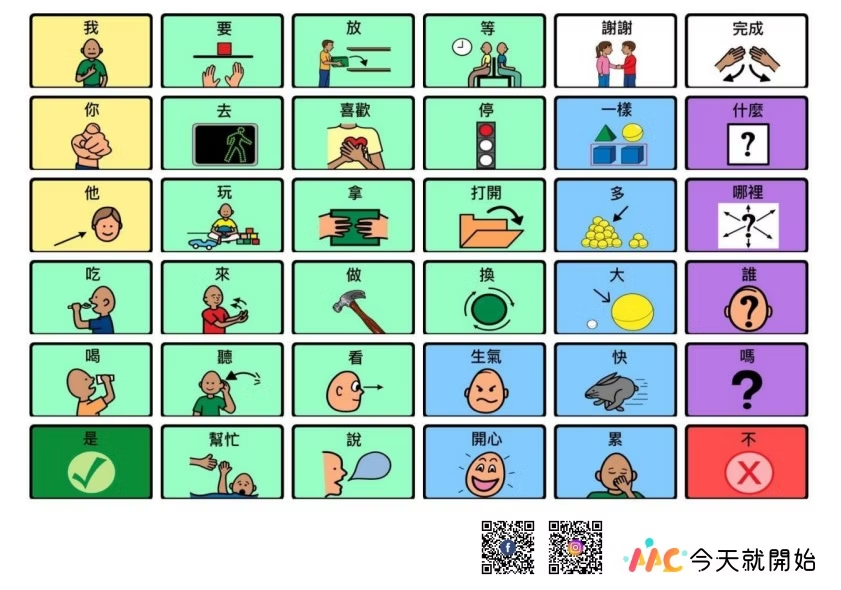
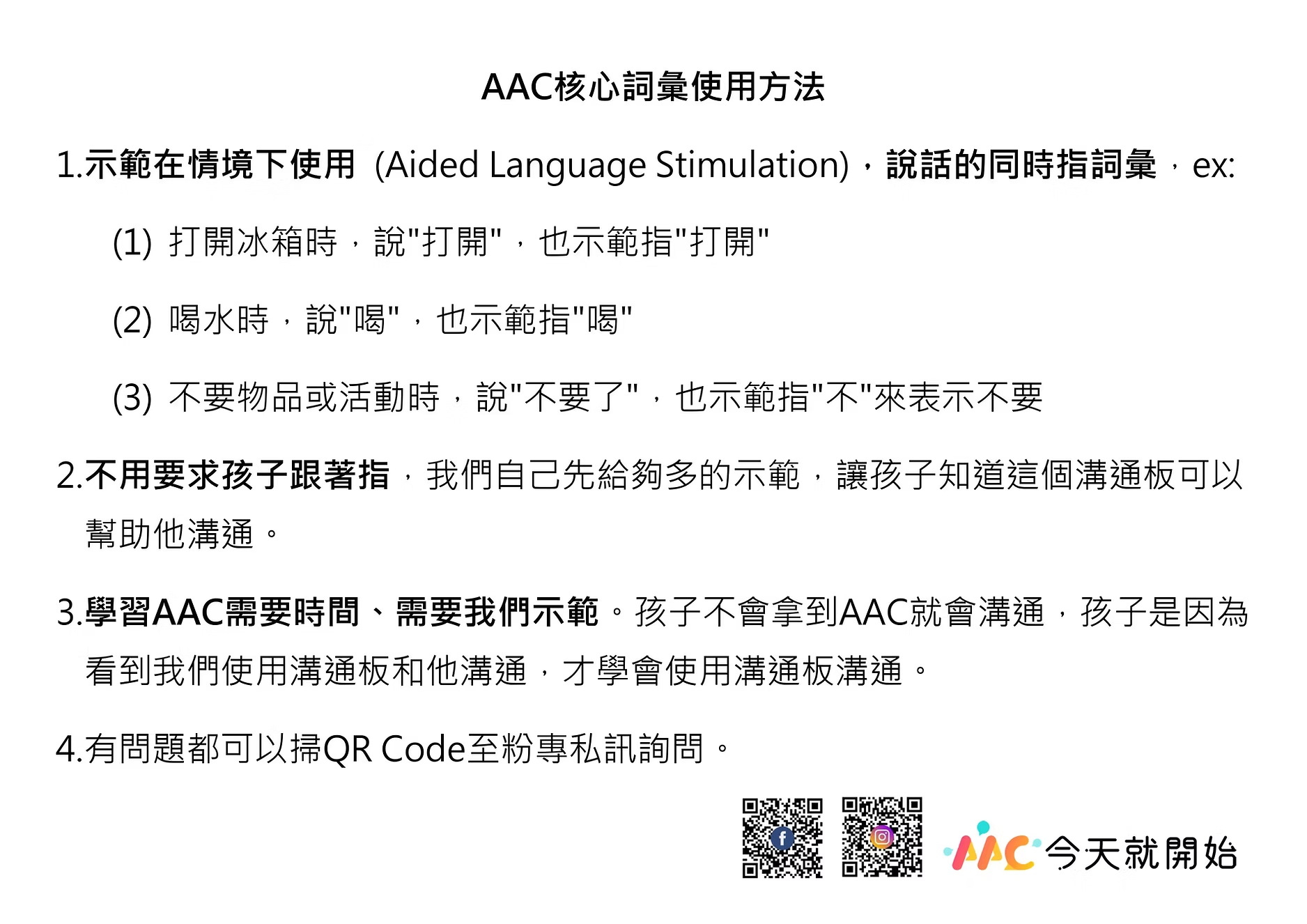
For every non-verbal or minimally verbal child I work with, I bring out this laminated core vocabulary board. I talk while pointing to the vocabulary on the board, letting the child see language visually and providing an alternative communication channel.
For example:
(1) When opening a toy box, I model pointing to “open”
(2) When reading a picture book, I model pointing to “look”
(3) I model pointing to “no” to express not wanting an item or activity
(4) When the child is looking for something, I model pointing to “where”
What Is Core Vocabulary?
Core vocabulary consists of high-frequency words used in conversation that can be used across different locations and with different communication partners. This gives us abundant opportunities to model in context, and gives the child abundant practice. Rather than hand-over-hand guidance, we provide extensive modeling. The ultimate goal is for the child to independently point on their own (autonomous communication) and express what they want to say.
This core vocabulary board includes words of various parts of speech:
- Yellow — Pronouns
- Green — Verbs
- Blue — Adjectives
- Purple — Questions
- White — Thank you, Done
- Other — Yes, No
Benefits of Using a Core Vocabulary Board
1. Supports Language Comprehension
Spoken language disappears once it’s said, but visual symbols remain. For children with language delays, providing visual support and extensive modeling in context helps them understand language.
2. Supports Language Expression
For children who have difficulty communicating through speech, pointing to pictures provides an alternative channel that supplements speech and helps them be understood more effectively. Core vocabulary can be used across different locations and with different communication partners, helping the child experience the power of communication!
3. Enables Multiple Communication Intents
Communication isn’t just about requesting items. There are other intents, including asking questions, making comments, and using social etiquette. For example, when seeing a pizza, we don’t just say “I want pizza.” We might also say “So big!” or “Who bought it?” or “Yummy!” or “Thanks!“
4. Enables Word Combinations
Core vocabulary allows for word combinations, such as: “help + open,” “no + like.” Just like children who use speech progress from single words to phrases to sentences, children who use AAC follow the same path.
Learning the AAC Core Vocabulary Board Requires Modeling
Children can’t be expected to use it the moment they receive it. AAC (Augmentative and Alternative Communication) is like another language — it needs to be learned.
How to teach? Aided Language Stimulation (ALS) — Modeling
In context, model by speaking while pointing to vocabulary on the board. Your interactions with the child stay the same — you simply add pointing to the words, providing the child with an alternative communication channel.
Think about it: typically developing children who use speech hear adults model spoken language extensively before saying their first word around age 1. So how can we expect a child to use AAC the moment they receive it? Are we providing enough AAC modeling?
After modeling with the core vocabulary board for a few sessions, I’ve found that many children’s abilities are better than expected. They quickly start pointing to pictures to communicate. Even if their pointing isn’t perfectly accurate, the child understands that this board can help them communicate. Our job is to keep providing models, and their pointing becomes increasingly precise over time.
(Think of it in terms of speech: a child first produces sounds that approximate words, and with practice, their pronunciation becomes more and more accurate.)
Teach Communication Partners How to Use It
Communication happens in everyday life situations. Teaching communication partners how to use the board is essential.
I model during therapy sessions and also give parents a board to take home, because language learning requires extensive practice opportunities in real-life contexts. Print multiple copies — stick them on the fridge, in the play area, on the door — communication can happen everywhere!
Transitioning to High-Tech AAC
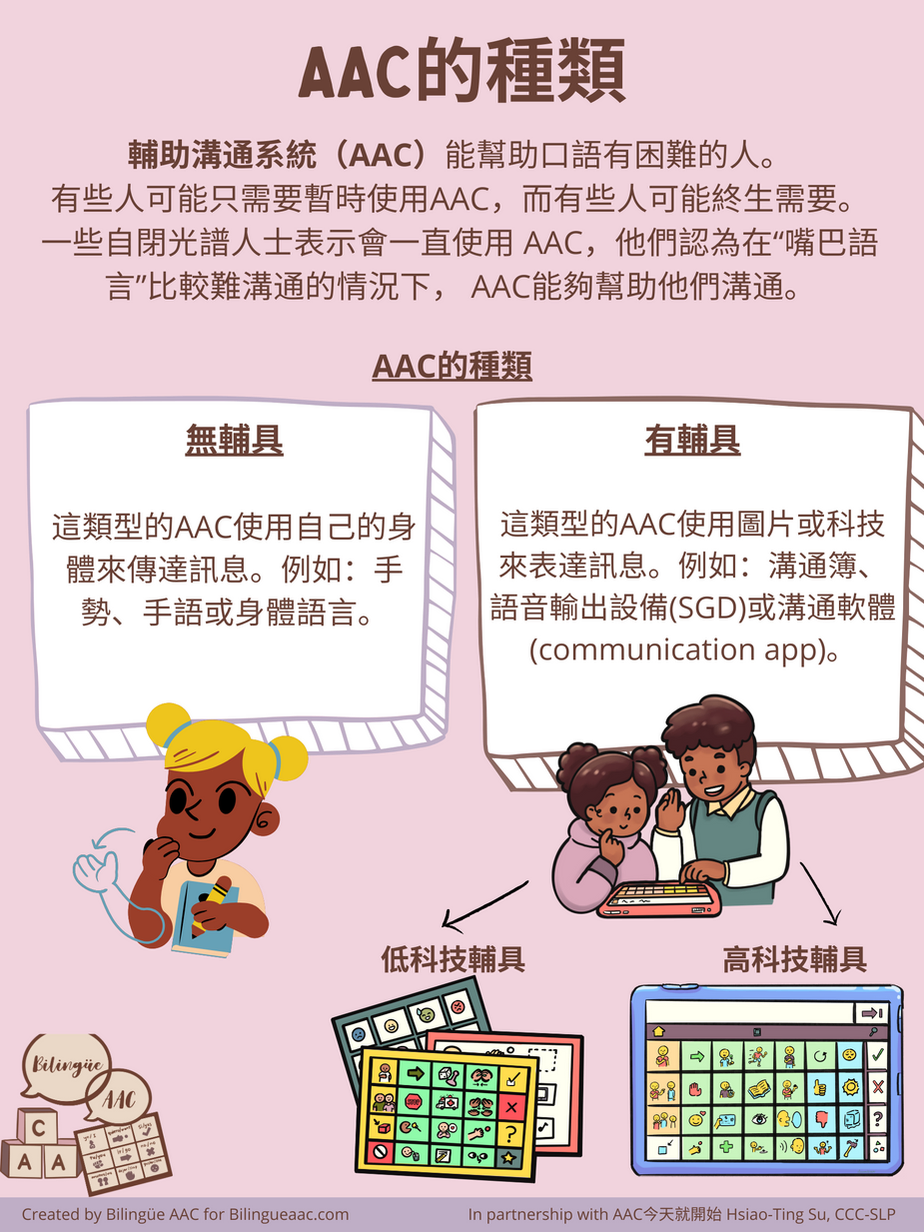
Once the child is doing well, you’ll notice the vocabulary on the board isn’t enough. That’s when it’s time for high-tech AAC (iPad)! Currently, the best Chinese AAC apps with robust language systems include TD Snap and TouchChat WordPower.
Keep modeling, modeling, modeling — using whatever communication method works for the child, showing them how to communicate.
Download the Core Vocabulary Board PDF and start modeling AAC today!
Core Vocabulary Board 36 — Start AAC Today (PDF)
References
Banajee, M., Dicarlo, C. & Buras Stricklan, S. (2003). Core Vocabulary Determination for Toddlers. Augmentative and Alternative Communication, 19(2), 67–73. https://doi.org/10.1080/0743461031000112034
Beukelman, D. R., & Mirenda, P. (2013). Augmentative and Alternative Communication: Supporting Children and Adults with Complex Communication Needs (4th ed.). Brookes Publishing.
O’Neill, T., Light, J., and Pope, L. (2018). Effects of Interventions That Include Aided Augmentative and Alternative Communication Input on the Communication of Individuals With Complex Communication Needs: A Meta-Analysis. Journal of Speech, Language, and Hearing Research, 61(7), 1743–65. https://doi.org/10.1044/2018_JSLHR-L-17-0132
Patesan, M., Balagiu, A. & Alibec, C. (2018). Visual Aids in Language Education. International conference KNOWLEDGE-BASED ORGANIZATION, 24(2), 356–361. https://doi.org/10.1515/kbo-2018-0115
Comments