Last week, together with Teacher Barbara, we visited a developmental center for a creative arts session with the residents.
The developmental center provides daytime care services. The residents are adults aged 18 and older with moderate to severe intellectual disabilities, autism, or multiple disabilities including both. Most of them are non-verbal or minimally verbal.
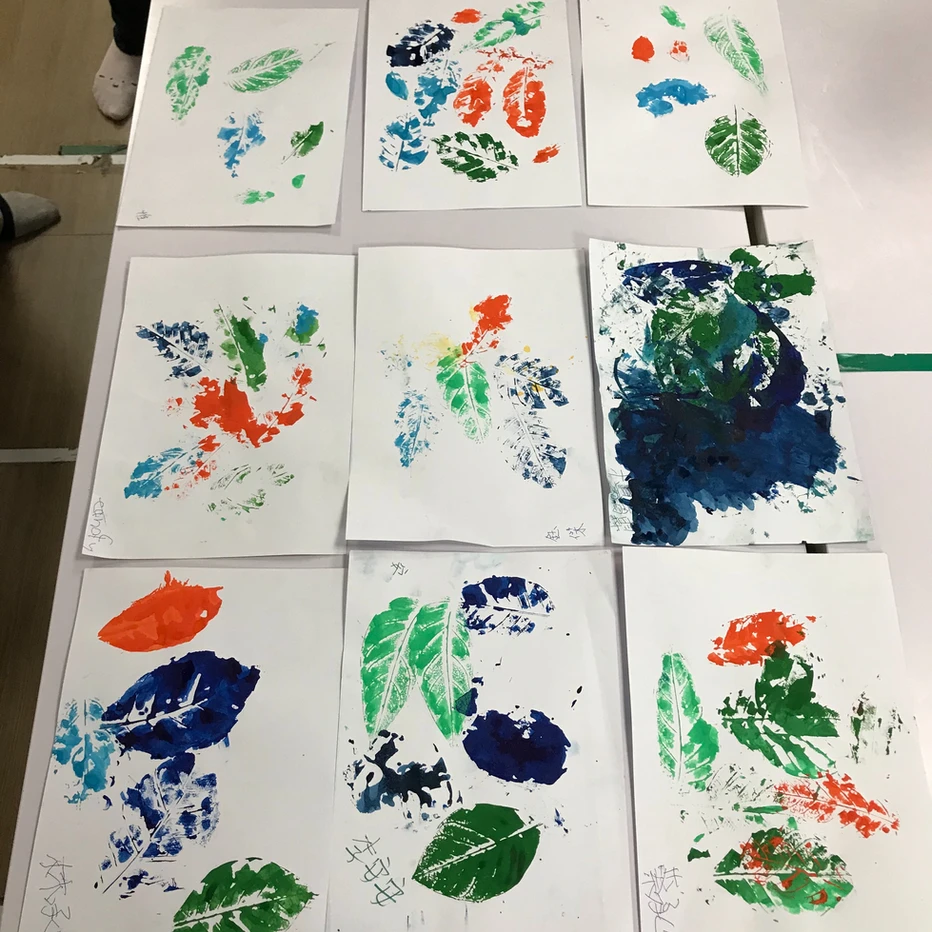
Teacher Barbara brought incredible energy! She started with a story, then guided the residents in touching different leaves to feel their textures, and taught them to make leaf prints with paint on paper — sparking their creative potential.
It’s not that they can’t — it’s that we haven’t taught them.
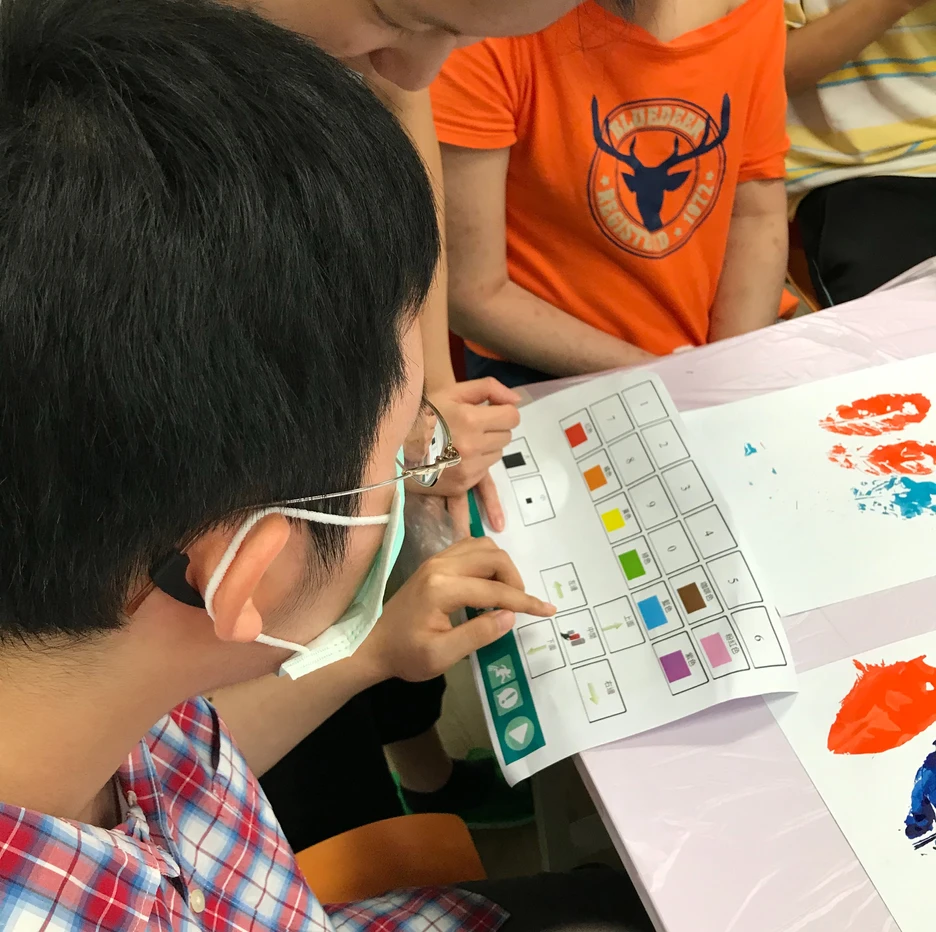
During the art class, I introduced a low-tech AAC communication board (printed on A4 paper) and asked the residents what colors they wanted to use and where they wanted to place their prints. If someone didn’t respond, I simplified to a two-choice question: “Do you want blue or orange? Top or bottom?” While asking, I also modeled pointing to the vocabulary on the AAC board.
Staff at the center commented that the board had too many cells and was too difficult — they meant well, of course. But I believe we should first teach the individuals how to use it and try several times before assessing their abilities. Often we think someone can’t do something, but really, we just haven’t taught them or given them the chance to learn.
Everyone wants to be seen and valued.
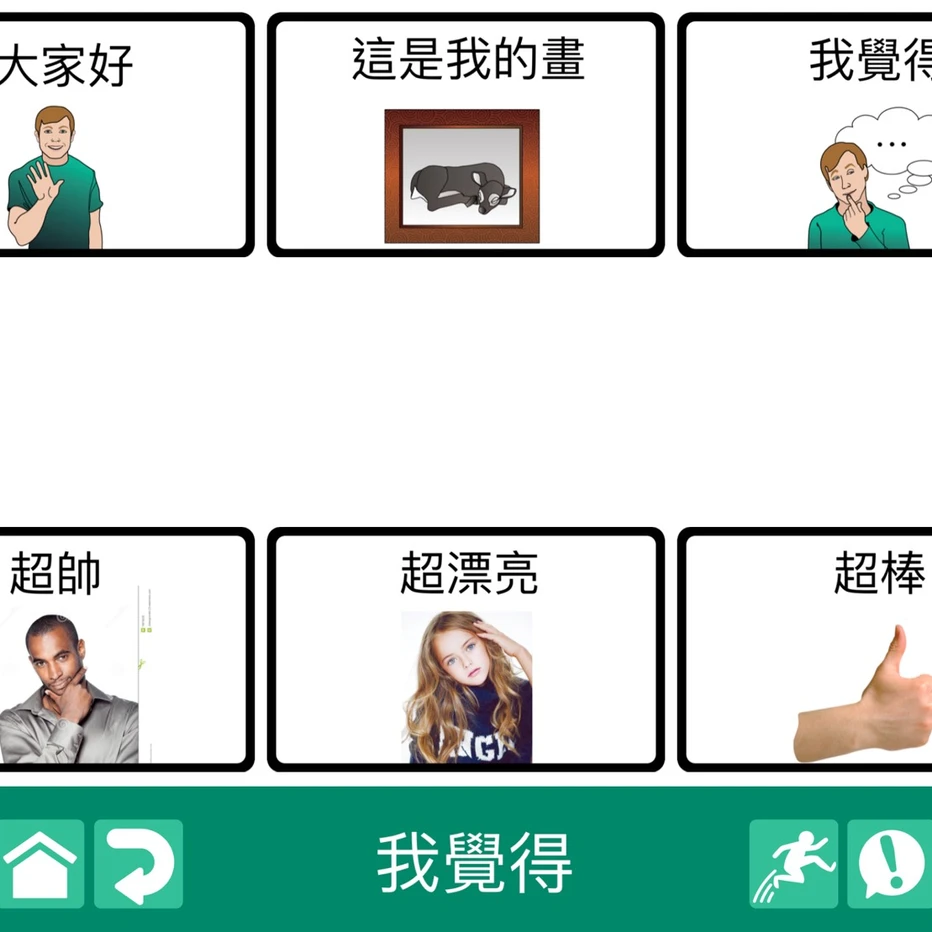
After completing their artwork, everyone got to present and describe their creation. The residents excitedly used AAC (an iPad with speech output) to say:
“Hello everyone, this is my painting. I think it’s… super cool / super beautiful / super awesome!”
After each presentation, everyone clapped enthusiastically. Some residents grinned from ear to ear. Others smiled shyly.
From their reactions, we could tell that most of them understood the activity and were thrilled to have the chance to perform.
There’s no right answer when sharing your thoughts.
Reviewing the video, next time I’ll remind the staff to first try gestural cues (pointing to the target word on the AAC board) to see if the individual can do it independently, and only provide physical assistance if needed.
The beauty of using AAC to share thoughts or opinions is that there’s no right or wrong answer — which makes staff more willing to let the individuals make their own choices.
Many of the male residents independently chose “super cool,” while the only female resident chose “super beautiful” on her own.
When we give people the opportunity, we discover they understand so much more than we realized.

Comments